Larch wood in sculpture and architecture of Podhale, larch versus spruce
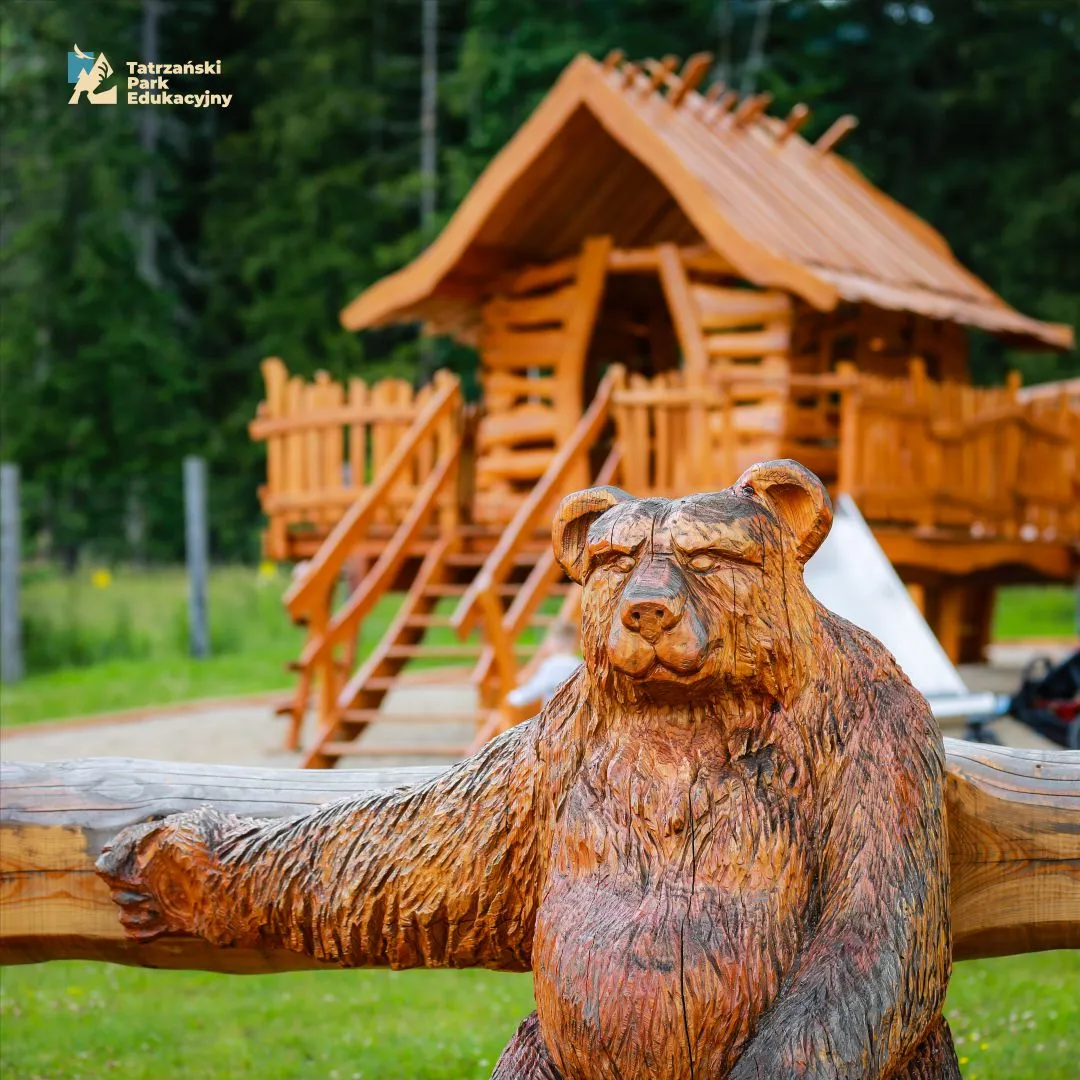
What are the sculptures in our Park made of?
When visiting our Tatra Educational Park, did you notice the animal sculptures accompanying you on your tour? These beautiful works of art, all carved on our special commission, were made from one of the most popular woods in sculpture, larch.
Larch, an exceptional tree
This beautiful tree, coniferous yet shedding its needles in winter, has properties that make both sculptures and structures built from it very durable. Larch wood is heavy, hard, durable and easily split. On top of that, it has a beautiful reddish hue.
Its advantages, however, make it quite difficult to work with. A sculptor or carpenter has to put in considerable effort to create beautiful larch structures.
Larch in art and architecture history
Interestingly, larch was used as far back as antiquity, including for building bridges. In the Middle Ages, its wood was used, for example, as panels for paintings by such masters as Raphael, while Rembrandt and Rubens painted with paints made from larch resin.
Buildings made of larch are very durable. A great example is the pearl of Podhale architecture, the historic church in Dębno, inscribed on the UNESCO World Heritage list, built precisely from larch and fir wood.
Spruce, the wood of the Highlander cottage
Returning to Zakopane, it is worth knowing that the traditional Highlander cottage is most often built from spruce wood. It is also durable, but much easier to work with due to its lightness and softness. These qualities mean it is used for items requiring great precision, such as violins.
In addition, it is resistant to pests and fungi. The popularity of this wood in Podhale construction is also linked to the abundance of this tree in the local forests.
The construction of a Highlander cottage, however, is a topic worthy of a separate post, so until next time!