Newts in the Tatras, fascinating amphibians from the ponds beneath Krokiew
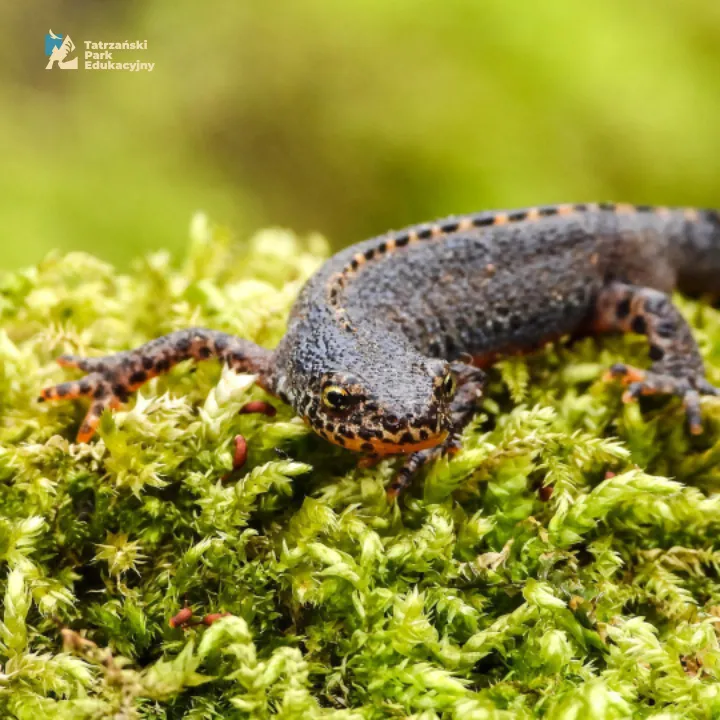
Dragons from the pond, a few words about newts
In the ponds right next to our Tatra Educational Park live many fascinating organisms. Last week we wrote about water striders, and this week we will introduce you to newts.
Newts are amphibians, not reptiles
These amphibians may remind some of lizards, which after all belong to reptiles, but it is important to remember that a newt’s life is tied to bodies of water, and we classify them as tailed amphibians.
In the Tatra Mountains and the surrounding region we can encounter three species of newts: the Alpine newt, Carpathian newt and smooth newt. In the ponds beneath Krokiew we most often deal with the Carpathian newt. It is here in spring that its breeding takes place, and afterwards, together with other amphibians, it migrates into the depths of the Tatras.
Newt reproduction, eggs instead of spawn
The newt lays its eggs in shallow bodies of water. Unlike frogs, newts do not lay spawn but individual eggs, sometimes only connected in a string. Mother newt often wraps her eggs in leaves or attaches them to objects on the bank or bottom of the pond.
From the eggs hatch larvae (tadpoles), which after a few weeks transform into adult specimens (this happens around July, so keep your eyes wide open!). After such growing up, the newt comes onto land and lives on land, although it is attached to its native body of water and usually returns to it for breeding.
Body structure and curiosities
Newts have a different number of toes on their front and hind legs, like salamanders, four at the front and five at the back. Their body, like the bodies of all amphibians, is equipped with mucous glands keeping the surface moist, as well as venom glands.
There is no need to be afraid though. Only rubbing the secretion from the venom glands into the eyes could end unpleasantly for a human, it can cause conjunctivitis. This does not mean, however, that you should catch newts and pick them up! Better to leave them be.
When and where to observe newts?
In truth, the easiest time to observe them is in spring, during breeding and reproduction, since later, in adult life, they are rather active at night.
It is also worth knowing that Alpine newts in the Tatras have their breeding grounds even in the dwarf mountain pine zone! Such high mountain creatures they are…