Water strider, the insect that walks on water, fascinating ponds at the Tatra Educational Park
Kayaker, swimmer or skier?
When visiting our Tatra Educational Park, did you notice that there are small ponds in the forest? It is a very interesting place from a natural perspective. Soon we will begin building new installations that will allow you to safely admire this fascinating microworld without disturbing the ponds.
The microworld of the ponds beneath Krokiew
If you look closely at the ponds, you will see the rich variety of flora and fauna associated with them, and one of the creatures living there is the water strider. It is that pseudo spider that walks on water!
What is a water strider?
Water striders are true bugs, very common in Poland. They inhabit bodies of water, both natural and artificial. The important thing is that the water is still or very slow flowing.
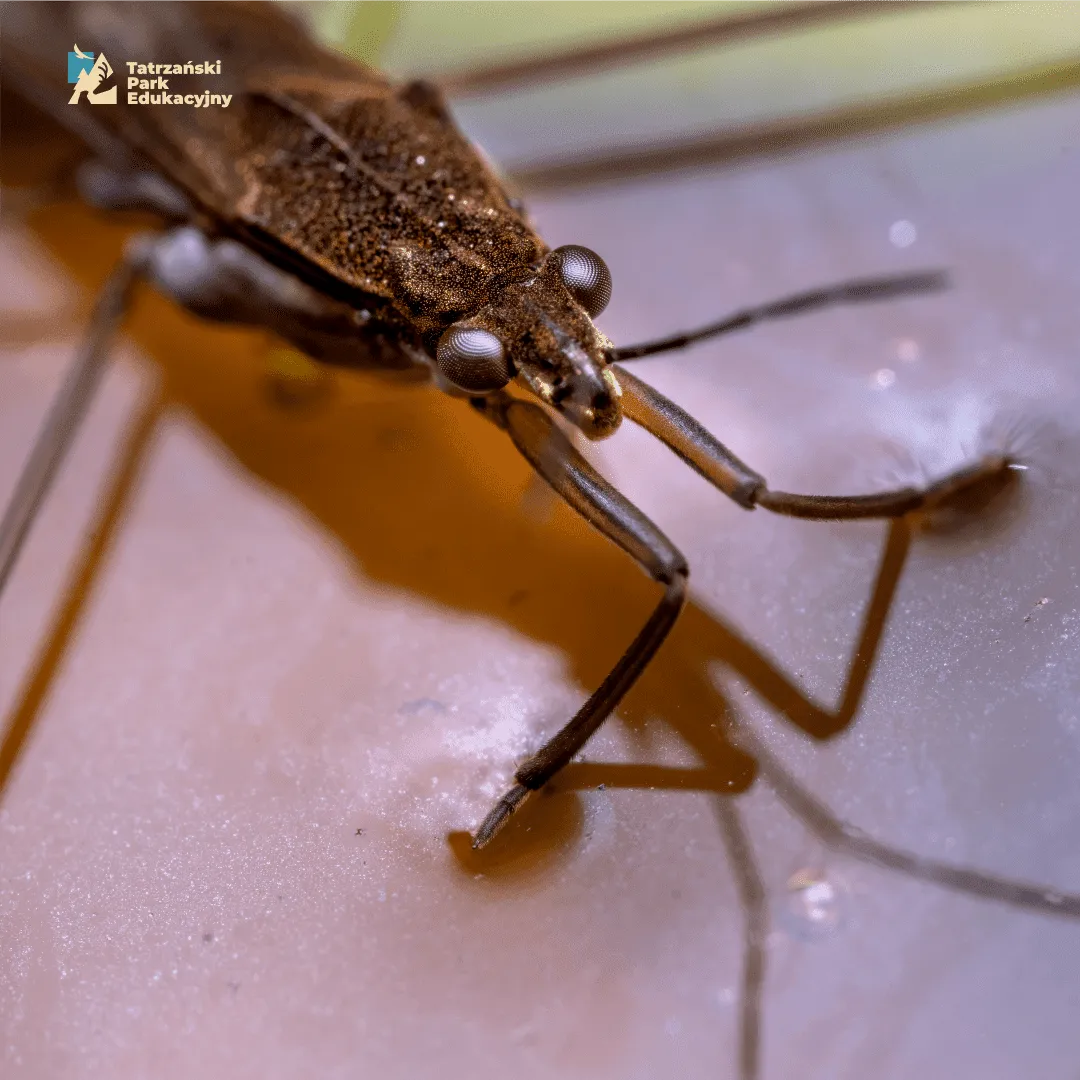
These are very interesting insects whose body structure allows them to run on water. They have an elongated body and three pairs of legs. The front pair is short, grasping and positioned under the head. The middle and hind legs are very long, and at their ends they are equipped with hairs that enable them to move across the water.
The secret of surface tension
Water striders take advantage of the surface tension of water. This is a property of liquids which causes water at the boundary with air to behave like a stretched membrane. The water strider glides across the surface of the water like a cross country skier, and that is where the Polish name nartnik (from narty meaning skis) comes from.
A predator hunting mosquitoes
They are predators, eating other insects that fall into the water, including mosquitoes. Water striders sense every vibration of the water caused by a future victim falling in, so they immediately glide up to the prey and pierce its body.
When and how to observe water striders?
We can observe them on sunny days. During rain they face great danger, a falling drop of water can push them under and drown them.
We can admire them in action throughout spring, summer and into autumn. In winter they come onto land and bury themselves in the leaf litter.