Animal parents in the Tatras, how deer and marmots raise their young
Animal parents
Our Tatra Educational Park is most often visited by families with children. But have you ever wondered whether all animals are good parents?
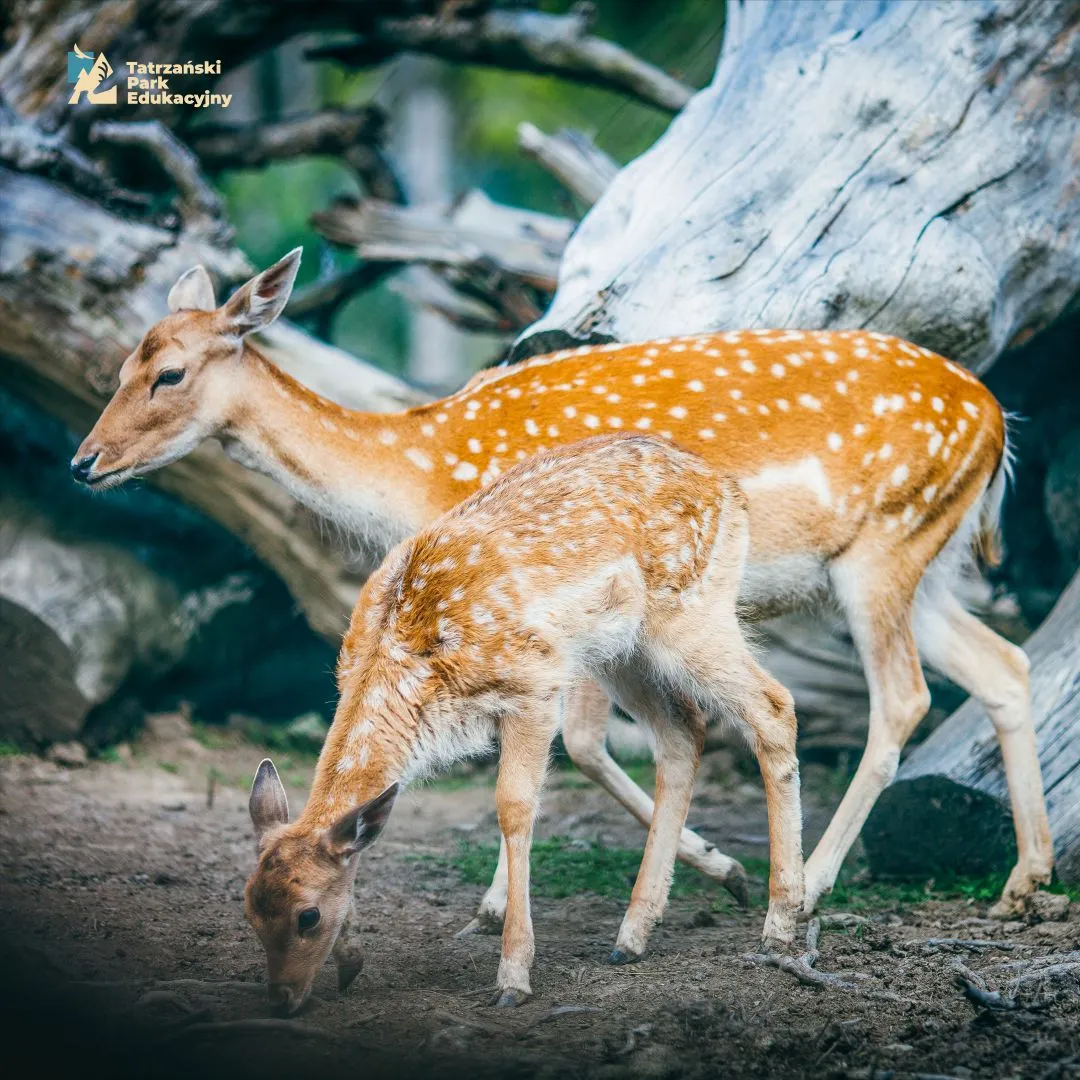
Deer family, caring mothers and absent fathers
Take, for example, the deer family, which you can admire here at the Park. It turns out that while mothers, for instance of roe deer or red deer, are caring and stay with their young until they reach near maturity, the fathers tend to disappear from sight.
Male deer live alone or in small bachelor groups. They approach females only during the rutting season, into which they pour an enormous amount of energy. Anyone who has heard, or even better, seen the deer rut knows it is an exceptionally intense time.
After mating, male deer lose interest in both the females and their future offspring. During this time they feed intensively to replenish the energy they burned before winter. Males sometimes encounter females at feeding grounds, but these meetings are rather incidental and lead to nothing.
Life in herds of hinds
Young males group together, while older ones lead solitary lives. Not so the females. Hinds gather in groups of several or even a dozen adult and young individuals, often unrelated to each other. The groups are led by an experienced female, and their goal is safety, both from predators and from the harsh winter.
Sometimes in the forest you can spot a herd of hinds with one or two stags. It is worth knowing that these are not adult individuals but young males who already exceed their mothers in size. For their mothers, however, they are still children to be cared for.
<h4Marmots, true family clans
A completely different approach to family is taken by male marmots. Marmots live in clans made up of several families: both parents and their offspring, often adopted. In a single colony there are therefore as many males as there are families.
The dominant male of the colony takes care of defending its territory. He patrols the area and marks it. If a male from a foreign colony appears nearby, often bloody clashes follow.
As you can see, animals have a wide variety of family customs. Our job is not to judge, but to tell you about them.