The Highlander cottage, traditional Podhale architecture, beams, shingles and pazdury
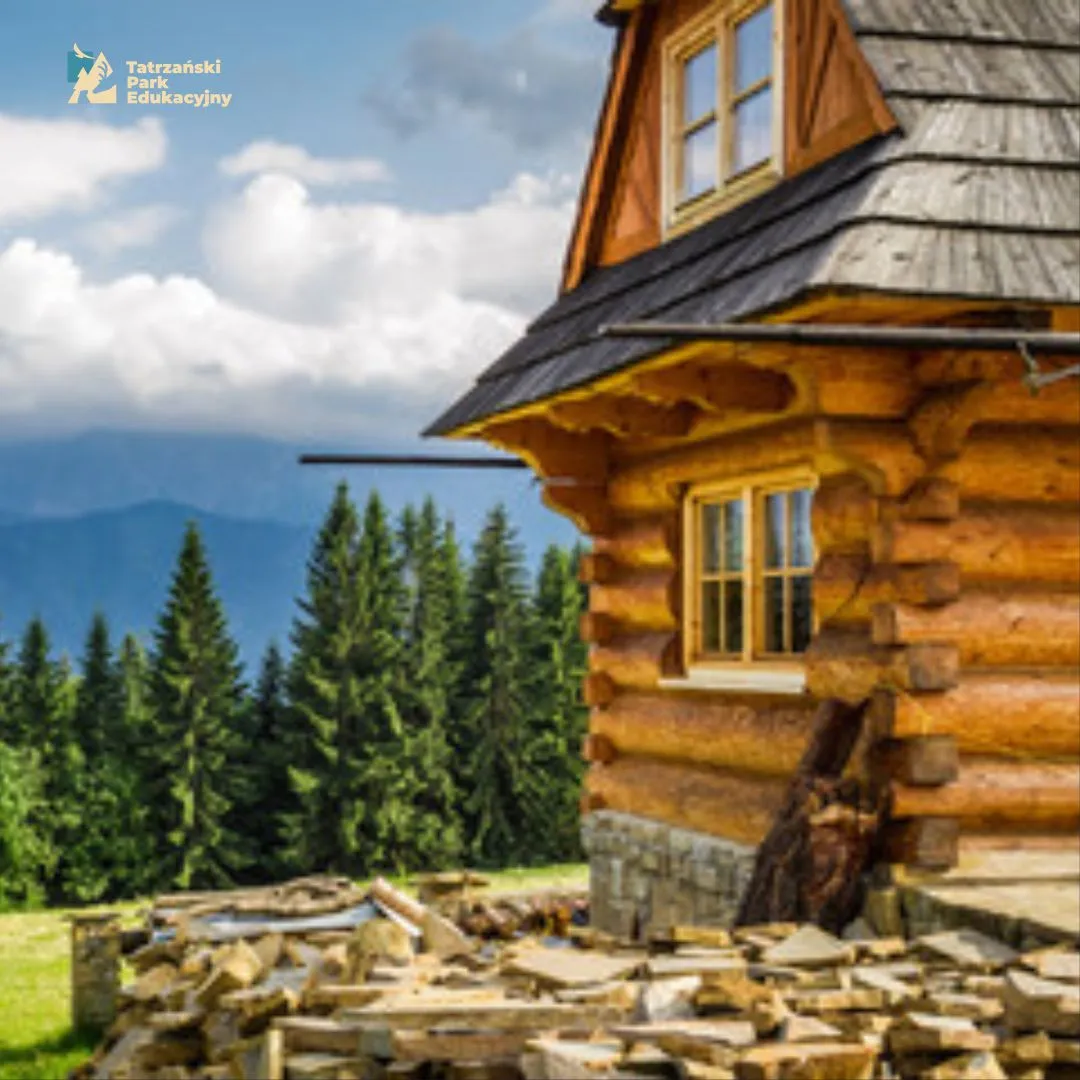
The Highlander cottage, chałpa or chata?
Walking around Zakopane and the surrounding area, you will surely have noticed the distinctive wooden Highlander cottages (góralska chałupa). These charming buildings are an incredibly valuable cultural heritage of our region and they deserve a closer look.
Log construction and hewn beams
Every Highlander cottage features log construction built from płazy, beams split lengthwise down the core of the log, usually from spruce. They were laid one on top of another, and at the corners of the cottage, called węgły, they were joined with a lock using special notches.
The whole structure rested on pecki, flat stones placed at the corners of the building. Originally, the gaps between the beams were filled with moss harvested from the wetlands of Podhale, but over time wood shavings braided into ropes or plaits, the so called wełnianka, came into use. This material is still used today as an excellent insulator.
Interior layout and two rooms
A very distinctive feature of the traditional Highlander cottage is the placement of two completely independent rooms to the right and left of the entrance, separated by a hallway.
Roof, shingles and pazdury
Cottage roofs were gabled with rafter framing, covered with wooden shingles (gont), wedge shaped boards that interlocked. The Highlander roof had very wide eaves protecting the beams from getting wet and allowing one to walk around the house with dry feet.
A decorative element of the roof was the pazdury, vertical wooden ornaments mounted at the ridge of the roof on its outermost rafters. The most decorative part of the cottage, however, was the doorway and the door itself, which was often studded with wooden pegs forming fanciful patterns.
The richness of ornamentation, however, appeared inside the cottage, and that will be the subject of the next post.
Cottage orientation, the wisdom of the Highlanders
To conclude this short story about the traditional Highlander cottage, it is worth noting its orientation in space. The houses faced their windows (often present only on one side) and their longer axis to the south, so that the building received as much sunlight as possible. Especially during the harsh Tatra winter, this was of enormous importance for the comfort of life of the householders.