History of Podhale and Zakopane, where did the Polish Highlanders come from
Where did we come from?
“This is a strange land, different in landscape, ancient speech and customs from other parts of Poland. Different people live here than on the vast plains and lowlands.” Kazimierz Saysse Tobiczyk
The author also emphasizes that in order to understand the essence of this distinctiveness (the character of the people, the richness of artistic forms), one must be aware of the influences that various external factors have had on this region.
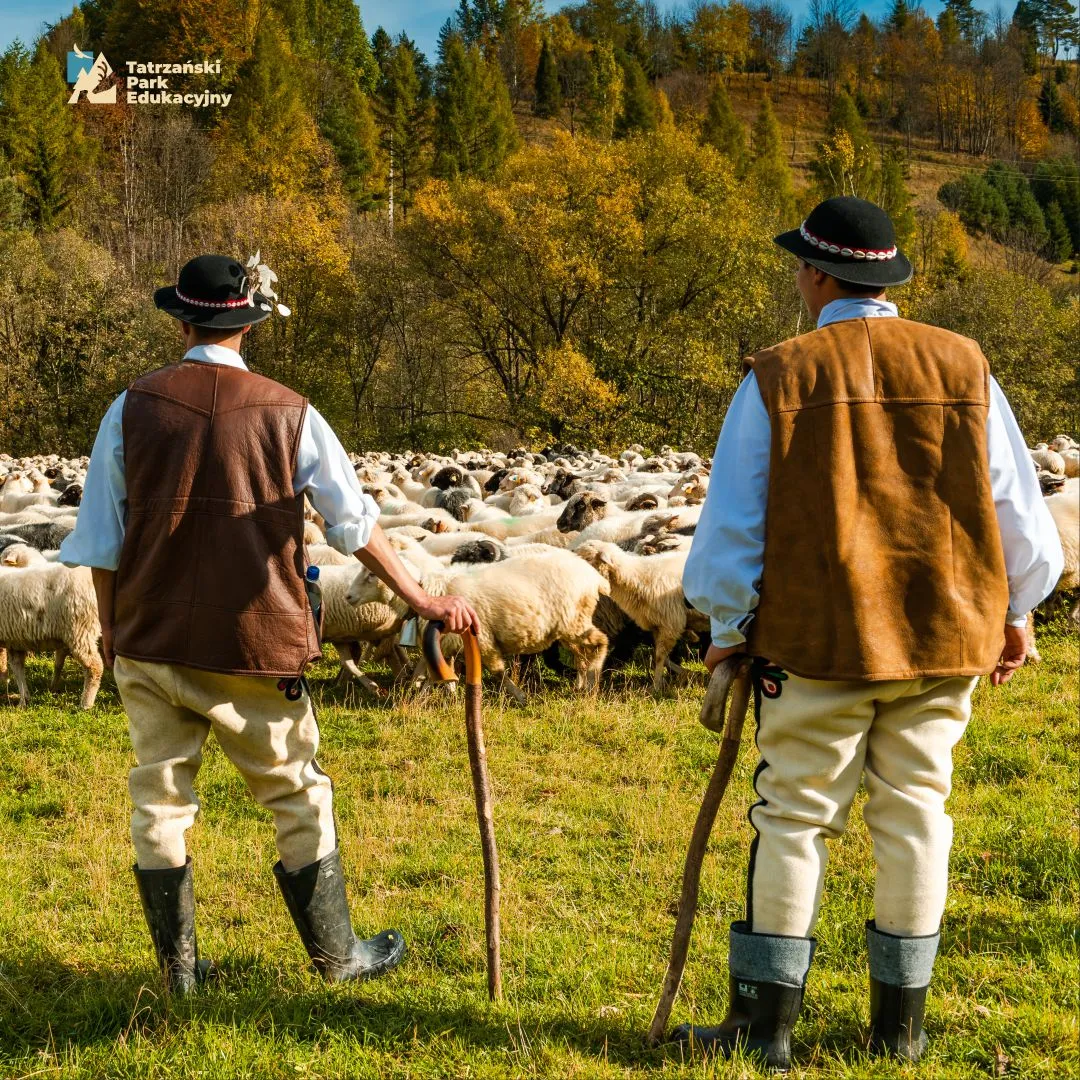
The first inhabitants of Podhale reached the Tatra Mountains around the 14th century, mainly during hunting and pastoral wanderings. They were the so called Vlachs (a Romanian Balkan people), who were mainly engaged in shepherding. A little later, miners arrived here. Small clusters of houses began to form, and pastoral and farming settlements established their territories.
In the 18th century, iron ore was discovered in the mountains, and the metallurgical industry began to develop. This led to landscape changes, as large stretches of forest were cut down for fuel. However, this did not last long, as the ores turned out not to be very rich and the foundries were closed.
Most of the population living here was engaged in farming and sheep breeding, sometimes hunting. The raw materials obtained from herding fostered the development of textile crafts (which continues to this day).
During the partitions of Poland and afterwards, the situation did not change. It was only travelers who ventured here from central Poland that contributed to popularizing the land “where proud and self confident people lived”.
As early as the middle of the last century, summer tourism began to appear, first settling in villages and hamlets, and later in Zakopane. The town quickly became the central hub of the sub Tatra region. The local population participated little in this trade, as their main source of income was still livestock and agriculture.
Paradoxically, the development of Zakopane caused some visitors to once again start exploring the surrounding villages, wanting to get closer to the culture and folklore of Podhale. The expansion of roads and railways increased the number of people coming to the Tatras. It was then that some of the Highlanders decided to abandon their previous way of life and began working in tourism services…